Here’s a quick recap of what I’ve had the opportunity to read in June.
Non-Fiction
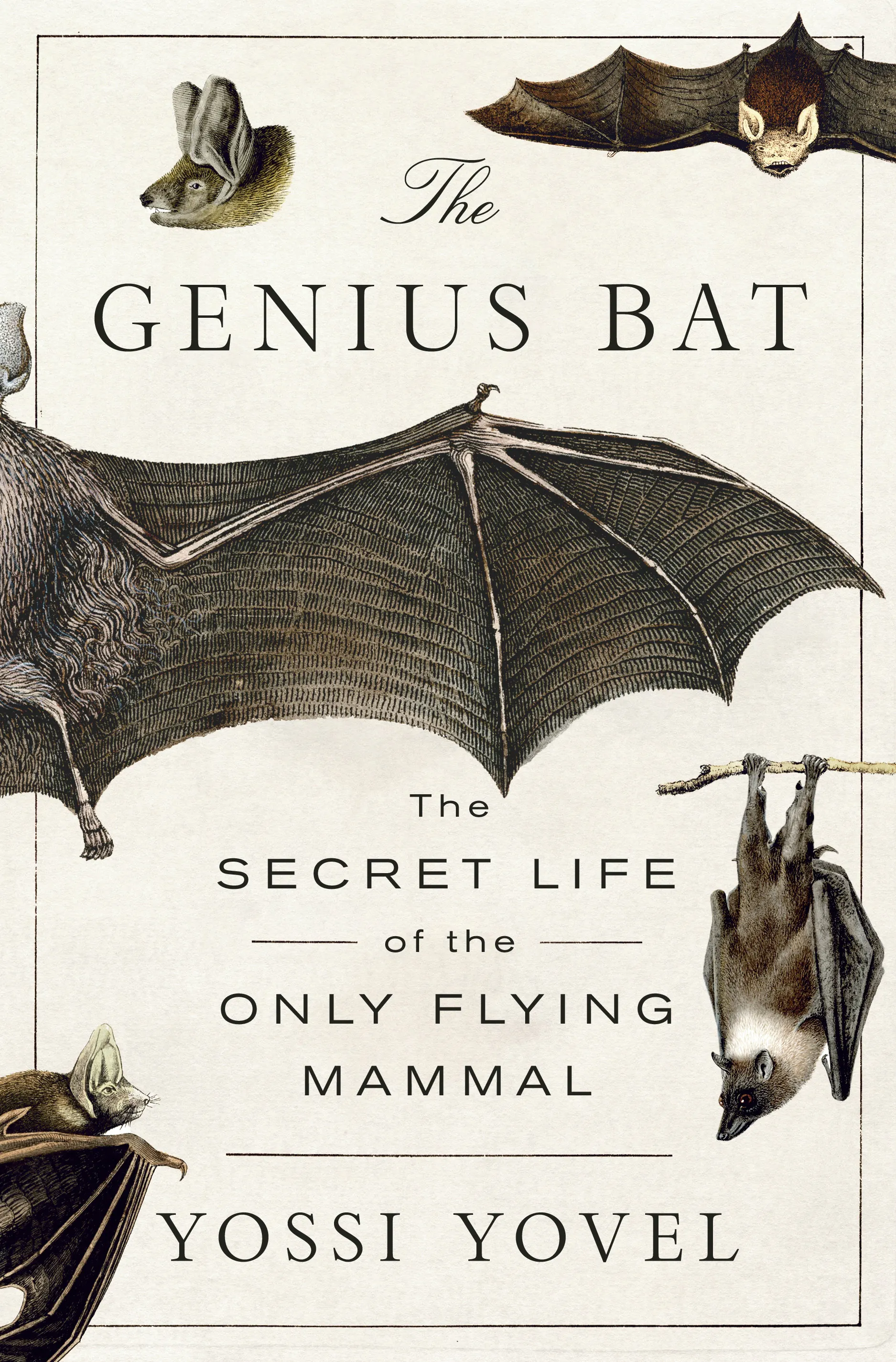
The Genius Bat, by Yossi Yovel
I’ve read quite a few books lately about our ever-evolving perception of animals. Some are interested in the entire animal kingdom and others are quite specific – from an entire order like birds to a specific class like in this book. It’s not exactly a hard sell, bats are quite famous in popular culture as they are the only mammals capable of flight and so vital to local ecosystems. Studying a wide variety of bat species (there are over 1500 discovered so far), the author explores how they use their very specific sets of skills to survive and thrive in their environment. Sure, as an intensely curious person, I’m perhaps the most obvious audience for such a book. It’s quite technical at moments, focusing on the “how” of experiments/observations and not as much on the results themselves. It’s still interesting and I learned quite a bit about bats, but it might not be for everyone.
Raising Securely Attached Children, by Eli Hardwood
As a teacher, I’ve been working with children for the past twelve years or so. Over time, while dealing with kids with vastly different backgrounds and families, I’ve become more and more aware of how important emotional security is. It seems rather obvious stated like that, but when you actually witness it on a regular basis, it becomes quite stark. That’s what the book is all about, the importance of fostering a climate of trust and security for children as they grow up. Some would argue that this will leave the child weak and coddled, but there’s ample evidence against such a conclusion. It’s not exactly groundbreaking, but I enjoyed the author’s approach and relatability. There’s a good mix between the theory and day-to-day practical advices. A good read overall, especially if you have younger children.
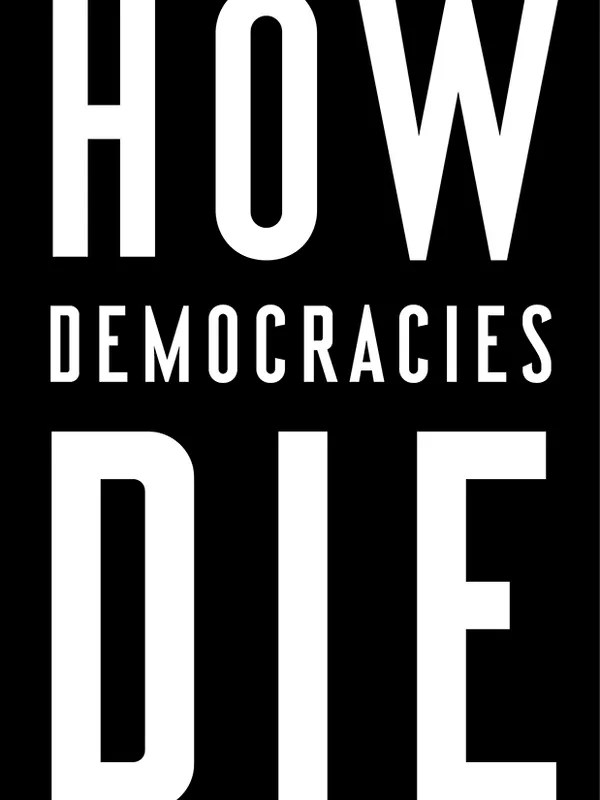
How Democracies Die, by Steven Levitsky and Daniel Ziblatt
In this work written by two Harvard professors, we take a look at the ways many democratic governments have failed in the past 150 years or so, and how some managed to avoid spiraling down. The objective of the book is to put America’s current state into perspective ; how its current democratic backsliding compares to historical ones. Given that it was published in 2018, not even a couple of years into Trump’s first term, it’s a stark reminder that even if you have all the evidence laid bare, many will just ignore the signs. I admit I thought at the time that it couldn’t possibly be worse, and that enough guardrails were in place to protect the ideals of democracy. Boy was I wrong. I have a feeling the authors wouldn’t be all that surprised, given what they have written here. It might very well be the most unenthusiastic “We told you so” ever uttered. This book is the epitome of the famous quote attributed to Churchill “Those who fail to learn from history are doomed to repeat it.”

L’Équation de la Chauve-Souris, par Mickaël Launay
Mickaël est probablement le vulgarisateur francophone moderne le plus connu dans le monde des mathématiques. Je l’ai tout d’abord découvert avec sa chaîne YouTube très populaire (Micmaths), où il présente une panoplie de concepts d’une manière à la fois précise et ludique. J’avais évidemment lu ses deux premiers ouvrages (Le Grand Roman des Maths & Le Théorème du Parapluie) et ce dernier s’inscrit dans la même lignée. Ici, il s’intéresse à des phénomènes du quotidien (le fonctionnement d’un aspirateur, les notes sur un piano, etc.) pour aborder des concepts physiques plus complexes. Fidèle à lui-même, les explications sont particulièrement claires car destinées à un public certes intéressé, mais pas nécessairement ferré. Bref, c’est exactement le genre d’ouvrage qui me passionne et que je suggère allègrement à qui veut bien l’entendre.
Fiction

The Night Fire, by Michael Connelly
This was my first book by Michael Connelly, an author strongly recommended by a colleague of mine. Of course, being around books for decades, I knew he was quite a popular author in the detective genre. It follows the work of two LAPD detectives, Harry Bosch and Renee Ballard, investigating three different crimes. I enjoyed his writing style which felt much more “police-oriented” (if that makes sense) than what I’m used to in crime novels. Such works, from my experience, focus on the protagonist’s personality and/or personal life a bit more. I realized as I was reading this that most other detective novels I’ve read were from European authors whereas Connelly is American. This surely plays a role in how the story is written. Don’t get me wrong, I enjoyed this read ; it just felt a bit different. I’ll certainly read more of his work in the coming months.
Stella et les Mondes Gelés, par Alex Bell
J’ai lu ce livre à mes élèves au rythme d’un ou deux chapitres par semaine pendant quelques mois. L’histoire n’est pas la plus originale, mais l’univers fantastique établi dès les premières pages est assez intéressant. La plus grande force de l’ouvrage, de mon point de vue, est le développement et les relations entre les personnages principaux, Stella et les trois autres adolescents de l’aventure. Il y a une certain prévisibilité dans l’évolution de celles-ci – c’est un livre pour enfants, après tout – mais le tout est bien ficelé. Si je me fie aux réactions et rétroactions de mes élèves, l’âge suggéré de 10 ans et plus me semble un peu élevé, je dirais plutôt 8 ou 9 ans. C’est le vocabulaire qui se démarque par sa précision et qui pourrait freiner des enfants plus jeunes, car l’histoire elle-même est assez facile à suivre. Il y a plusieurs autres ouvrages dans cette série ; le premier tome donne certainement envie de lire la suite.
Starter Villain, by John Scalzi
I’ll admit it, the combination of the weird title and the serious cat dressed up in a suit was a big selling point as I was browsing the e-book store. I don’t think I even read the synopsis beforehand so I came in entirely blind. In a few words, it’s the story of a 30-something guy named Charlie who is basically a nobody down on his luck, barely scraping by as a substitute teacher. His billionaire uncle, who he hasn’t seen in decades and is not particularly close to, dies and Charlie is asked to represent him at his funeral. So far it sounds like a pretty normal storyline, but it quickly devolves into something pretty weird and honestly very funny. The young man discovers his uncle was actually a supervillain operating from a volcano-based lair in the Caribbeans. I won’t spoil much more here, but it’s a very funny and engaging read.

