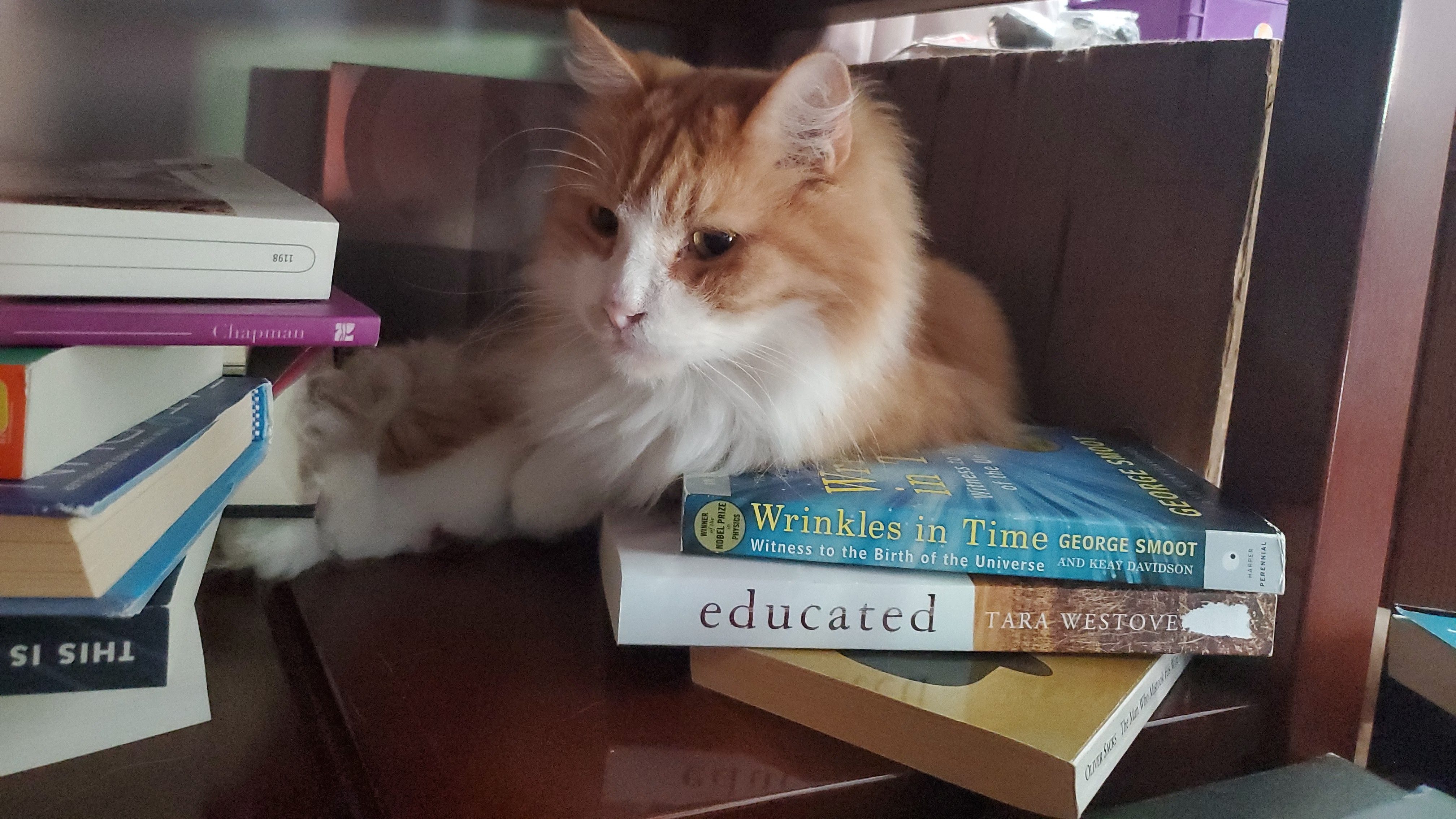
Here’s a quick rundown of every book I’ve finished during the month of May. A total of six non-fiction and two fiction books.
Non-Fiction
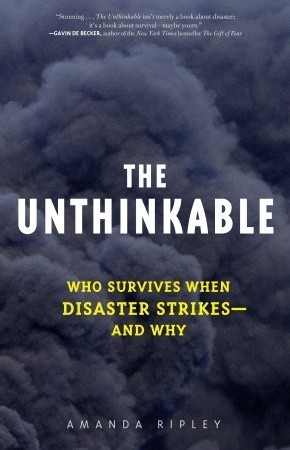
The Unthinkable, by Amanda Ripley
Who Survives When Disaster Strikes – and Why. It’s a fascinating insight into how humans are wired – or can be trained – to react to various types of adverse situations (fires, hostage situations, crowd collapses/stampedes, natural disasters, mass shootings, etc.). Studying many real-world cases about survivors and others who did not make it, the author tries to identify what exactly happens to the human brain is such scenarios. Why do some people freeze? Why some act rationally or irrationally? Why groups matter(or not)? Why training matters? Why do people stay (or leave) potentially dangerous places? And many other questions along the same lines. In many instances, there is no definitive answer because humans are complicated creatures. Still, there are potential avenues/solutions to explore in order to make us humans better at re/acting when disaster strikes. It’s a relatively short (under 300 pages) and easy read, well worth your time.
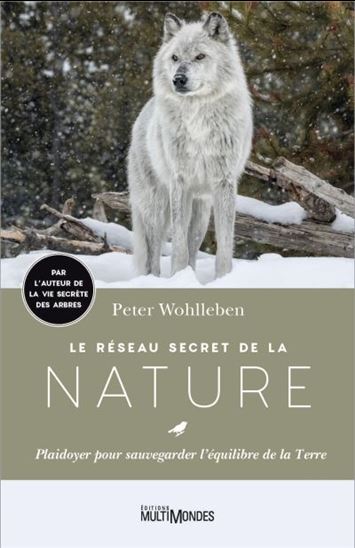
Le Réseau Secret de la Nature, par Peter Wohlleben
Je pense qu’il est impossible de ne pas tomber en amour avec la plume de cet auteur. C’est le troisième de ses livres (La Vie Secrète des Arbres & La Vie Secrète des Animaux) que j’ai l’occasion de lire et c’est toujours aussi agréable. Ingénieur forestier de formation, son amour et son émerveillement face à la nature sont palpables. Peter Wohlleben a clairement un sens de l’observation aiguisé. À l’honneur, les interactions souvent incomprises ou même inconnues entre les différents acteurs de la biosphère. C’est précisément le genre d’ouvrage qui donne envie de sortir, aller se balader en forêt et observer minutieusement tout autour de soi, bien que notre expertise ne soit pas tout à fait au même niveau! Je le recommande fortement.
13.8, by Josh Gribbin
The number 13.8 refers to the current accepted age, in billions of years, of the universe. This book explores how our own understanding of time itself has evolved since Antiquity, building on discoveries and technological advances to arrive at the current scientific consensus. Having read and watched many explanations of that whole process in the past decade, I can’t say I’ve learned a ton of new stuff. However, it’s an incredibly concise and well-written recap. Ignoring the notes at the end, I think it’s under 250 pages, quite short for a science book in my experience. It’s very accessible, even dealing with some concepts like dark matter, dark energy or the Cosmic Microwave Background.
Quit, by Annie Duke
This book is obviously about identifying the right time to quit and, even more importantly, what to quit. When you have invested (time, money, energy, resources or anything) into a project of any type, it’s a major challenge to let it go. The author explains why that happens, the usual consequences and how to get better at making the hard – but right – choices. Since this is something I’m struggling with quite often, it honestly helped me put things in perspective and learn how flawed the human judgment can be in such instances. I learned halfway through the book that the author is actually a pro-level poker player, which I never would have guessed. At the same time, knowing when to quit (or fold’em) in poker is perhaps the most valuable skill. This book is quite good and I strongly recommend it!
The Advanced Montessori Method I, by Maria Montessori
Certainly there are parts of this book that are useful for me as a Montessori teacher. There is, however, quite a lot of her thoughts and ideas about the different aspects of the human experience, most of them obviously relating to children. As with most of the earlier works, it’s more theory-oriented and dense.
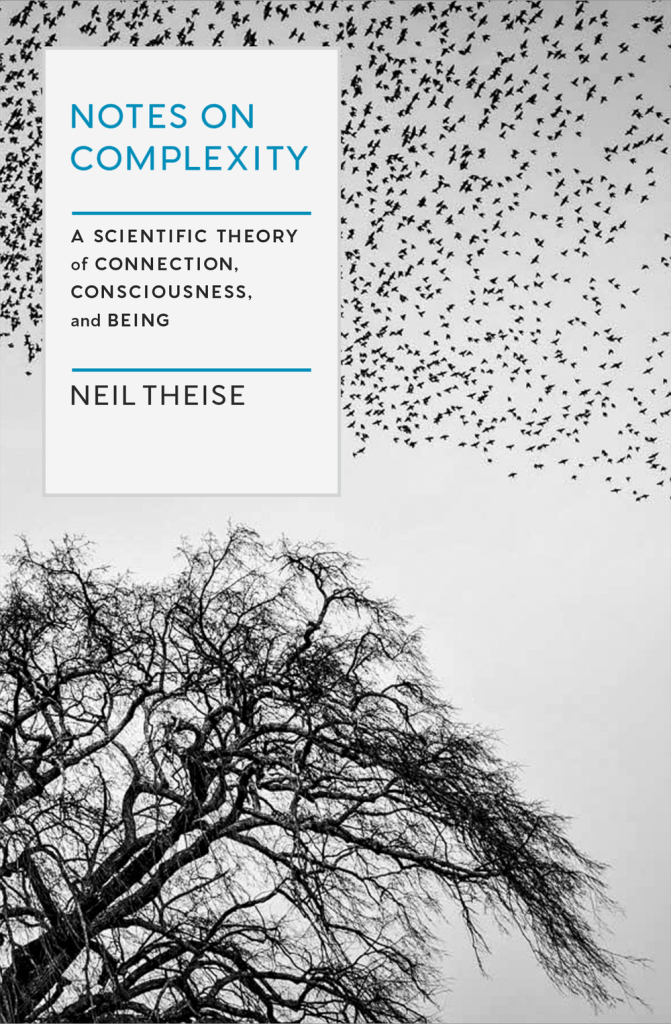
Notes on Complexity, by Neil Theise
I’m not exactly how to describe this book, yet I found it utterly fascinating. In a nutshell, its main idea is to explore the interconnectedness of complex systems at all scales, focusing mainly on life itself. From the quantum world to the size of the universe itself, you find that borders between each realm are meshed together. While all of this might sound overly ambitious, if not outright pretentious, it had the complete opposite effect on me. It felt genuine, presenting a view of the human experience that is both rational and beautiful. To me, that’s a wonderful way to make science part of our everyday life. It’s a very short book, under 200 pages, and an absolute joy to read.
Fiction
The Cruelest Month, by Louise Penny
Three novels in, I’m not entirely sure I’m sold on Louise Penny’s writing style. It sometimes feels a bit off and not super engaging. It takes a while to get involved. What makes it worth it, though, is the main character, Chief Inspector Armand Gamache. I really enjoy his personality and his worldview as a whole. In fact, in my view, the main investigation takes second stage to Gamache’s situation with the Sûreté du Québec (Quebec’s provincial law enforcement agency). I won’t spoil anything here, obviously, but I found this side-story more captivating than the murder and its eventual resolution.

Past Tense, by Lee Child
It’s hard not to love the character of Jack Reacher. Built like a brickhouse at 6’5″ and 250 pounds, he wanders around the country after a career as a military cop, seeking the odd job here and there and investigating what comes his way. In this story, he’s back in his father’s hometown to learn more about him. While we follow his investigation, another story takes place in the same town when two Canadians are locked up in a motel in strange and somewhat creepy circumstances. As you can expect, these two storylines eventually meet up in a action-packed finale. It’s certainly not the most original storyline and it does take a while for it to pick up the pace, but the ending is worth the build-up. As with every book in the series among those I’ve read, we discover a bit more about him and he reels us in with his incredible physical prowess and straight moral compass. A pretty solid read overall.
 I Read Many Things