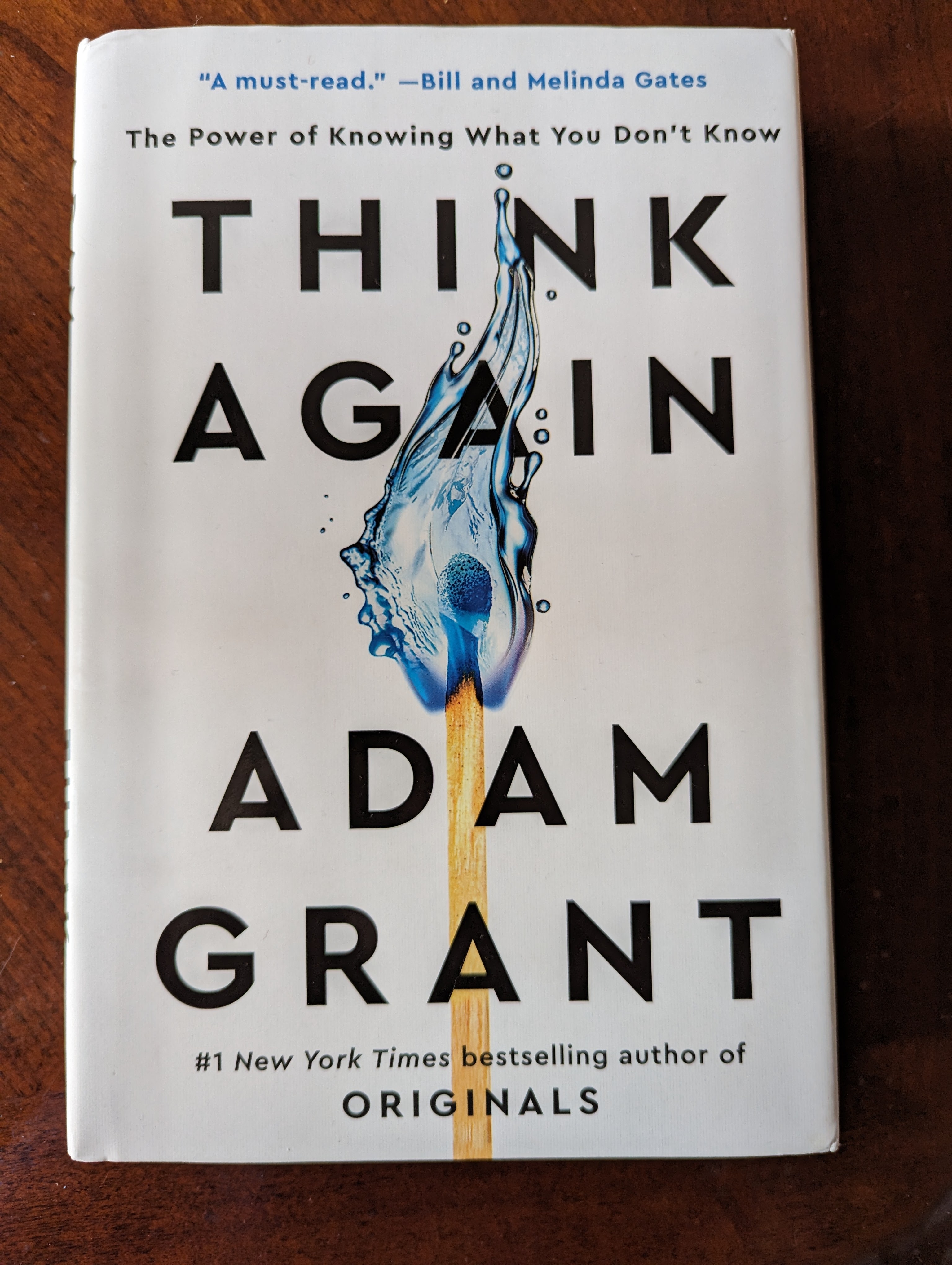
“Knowing what you don’t know.” Those few words were all I needed to want to read this book. As someone who absolutely LOVES to learn about anything and everything, I’ve always been fascinated by the process of learning, how knowledge can evolve, the value of questioning and doubting. In other words, I am the perfect target for this kind of book.
The author, Adam Grant, is a psychologist and professor at the prestigious Wharton school of business. His ideas are often accompanied by anecdotes and stories from the business world. However, they can still be applied in most everyone’s life.
The premise is straightforward, it’s all about being flexible about our thinking processes and being open. From the get-go, he adopts a scientific approach to thinking, comparing it to the usual three ways people defend or express their ideas
- The preacher, convinced he’s right.
- The prosecutor, proving someone else is wrong
- The politician, trying to win the approval of an audience
Each have their strengths and weaknesses, and can be justifiably used in certain situations. The scientist is Grant’s alternative to these three. Science is not infallible, it is curious and open to new ideas, and is not afraid to be wrong.
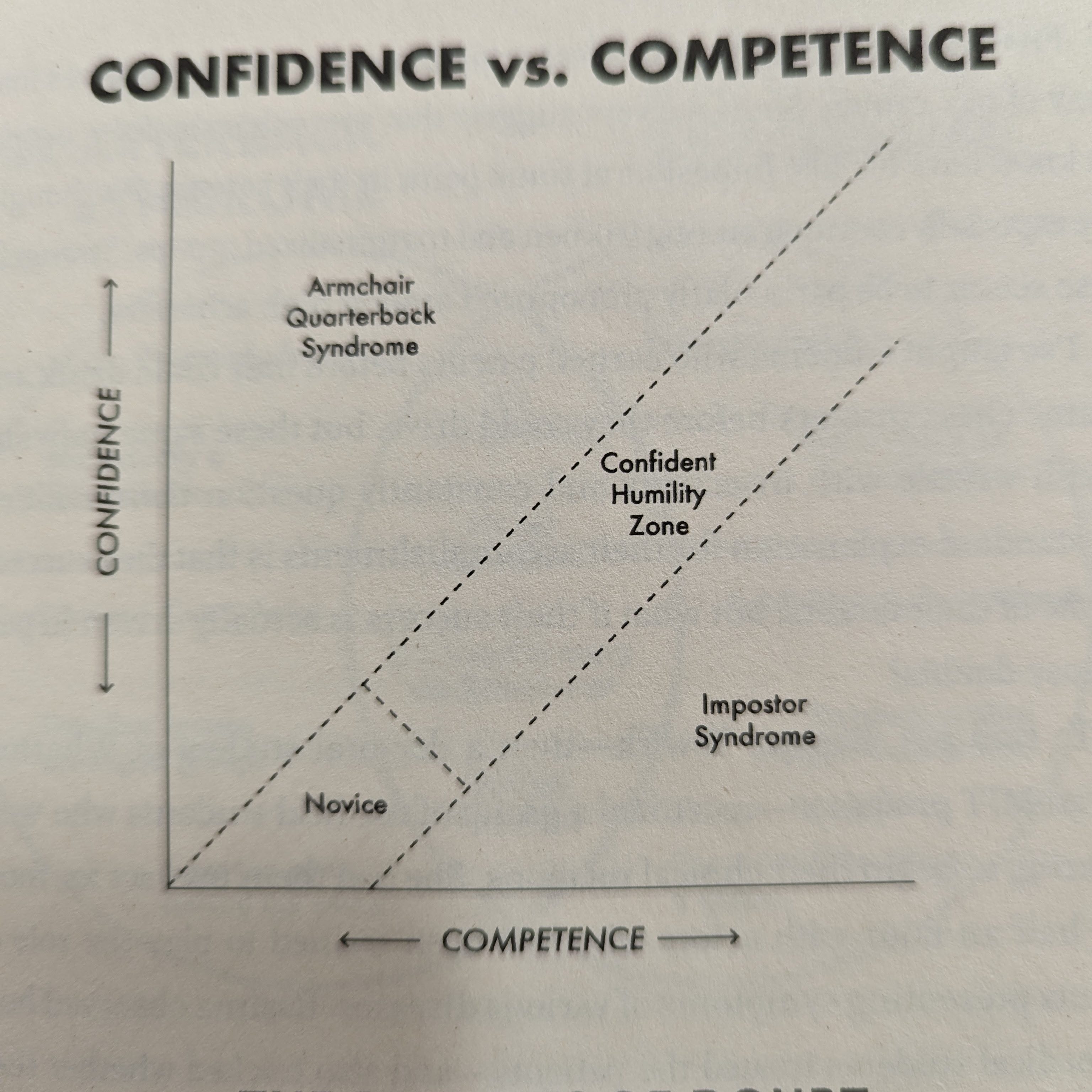
The first part of the book – Thinking again on an individual level – is the one that resonated with me the most. He talks about ideas like confidence and competence while using the known image of the armchair quarterback and the impostor as well as the Dunning-Kruger effect. Then, he extolls the value of doubt and being wrong and using that as an opportunity to learn (which made me smile oh-so-wide as a teacher). He ends this part with conflict, a proven way to learn and grow when used effectively.
The second part of the book is about interpersonal argument. It’s mostly focused on debates and heavy subjects, as well as the value of facts and emotions. He sees those as dances and not battles, as opportunities to have conversations and acknowledge common grounds. His idea about asking others “how” instead of “why” during such exchanges is a particularly interesting one. It’s particularly adapted to the modern political climate, where polarization is heavily prevalent.
The last section is focused on collective thinking, especially when it comes to larger organizations like businesses (i.e. that’s how we’ve always done it). He also spends time talking about the benefits for children and education. Lastly, he encourages us to carve out time to “think again” about our lives and careers every now and again. It’s a good habit to develop to avoid falling into certain traps.
It’s a relatively short (less than 300 pages of actual content). It’s incredibly accessible. His writing is clear and concise. He never spends too much time on a subject, conclusions are reached quickly and simply.
I absolutely loved it. I was hooked from the prologue. Of course, as I mentioned, I was already 100% sold on the idea of thinking and re-thinking about basically everything. This is something I’ve always felt was incredibly important, the ability to entertain divergent ideas without necessarily adopting them. It’s important to allow oneself to doubt and question.
 I Read Many Things