I don’t think there is any debate as to who is the best known detective in all of fiction. Conan Doyle’s consulting detective has been adapted and re-adapted countless times in so many different eras and genres. Apparently, Sherlock Holmes has been the recipient of a Guinness World Record as the most portrayed individual in all of fiction. Lately, the BBC series has done a wonderful job bringing Holmes’ adventures to the 21st century, with fantastic performances by Benedict Cumberbatch and Martin Freeman, amongst many other. I personally really enjoyed Guy Ritchie’s adaptations with Robert Downey Jr and Jude Law. I think my personal fondness for the idea of Sherlock Holmes comes from Disney’s The Great Mouse Detective, that I must have watched a gazillion times.
Anyway, I can go on and on about how much I’ve loved those adaptations. However, except for the couple of novels I’ve read a decade ago, I hadn’t read any of the original Sherlock Holmes adventures.
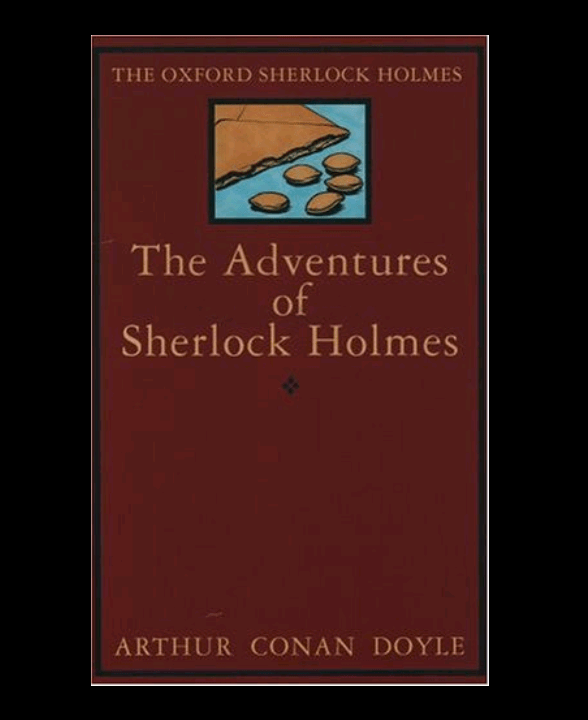
The Adventures of Sherlock Holmes is a collection of short stories originally published in the 1891 and 1892. There are twelve stories here, twenty to thirty pages long each. As is the tradition for the British detective, his stories are written from the point of view of John Watson, his profoundly loyal friend and partner during his investigations.
The stories follow mostly the same structure, with a person coming to Sherlock’s 221B Baker Street home in London to get the detective’s help regarding a situation in their lives. It might be because I read a couple of modern crime novels lately, but I expected more of the mysteries and investigations to revolve around murders. I think there were only one or two actual murders across the twelve stories. Most of the time, it’s people disappearing without leaving any hints or clues. A couple of stories are interesting because nothing has actually “happened” yet, but the client is experiencing an uncomfortable situation that requires an investigation of sorts.
Most of the stories were fun and intriguing. There were one or two that I thought were a bit flat, but never actually boring. I enjoyed this format ; it’s very short so you get to the point quite quickly. Obviously there can’t be as many twists and turns in twenty pages as there would be in a full-blown novel, but that does not mean the conclusion is straightforward. It managed to surprise me a couple of times. You get the usual Sherlock deductions seemingly out of thin air, usually followed by Watson’s utter amazement at his friend’s mental acuity. It can get a bit old, especially if you’re a bit used to the more modern versions of Watson. For example, Martin Freeman’s adaptation is much more active in the investigations. While he will be flabbergasted at times by Sherlock, he doesn’t hesitate to call him out or act somewhat impervious to him being who he is.
I also really enjoy reading old British writing. The way they talk, especially if the character is from a wealthy background, is just incredibly entertaining. The expressions they use, the words they employ, the general vibe ; you truly can’t help reading it a very bourgeois English accent in your head. It’s fantastic.
 I Read Many Things