
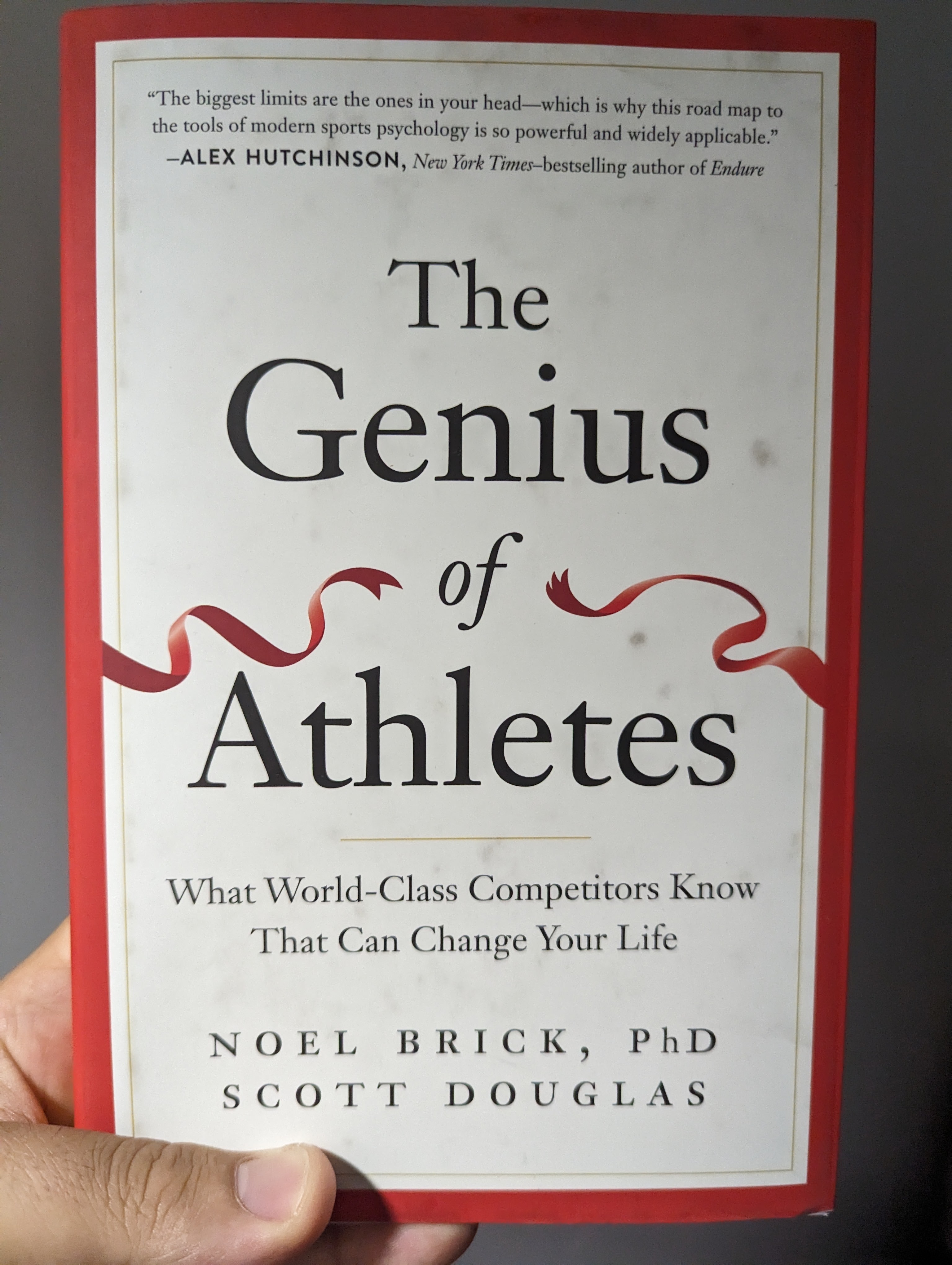
Here’s another book I bought almost exclusively for its title. I’ve been following a wide array of pro sports for decades, fascinated by what humans are able to do at the highest level. With time, I’ve come to appreciate not only the ridiculous athletics feats humans accomplish – for example, high jumpers routinely exceed the height of a door frame in major competitions – but also the mental component. In most cases, the psychological aspect of athletes is, at the very least, as important as the physical component.
That’s basically what I expected when I bought this book without, I’ll admit, looking at the summary beforehand. It’s not exactly that, but I’m not about to criticize a book for what it does not have ; that would not make any sense.
In a nutshell, the authors analyze psychological strategies- or tools, as they call them – used by professional athletes and how they can be utilized by anyone in everyday life. They use anecdotes from a handful of athletes, mostly long-distance runners, to support their points. Some of them sounded a bit obvious to be honest, but that does not mean they don’t have any validity.
One strategy I liked – and will certainly try to adopt in aspects of my life – is called “chunking”, the act of breaking down a long-term goal into small, less intimidating steps. That’s applicable in basically any objective you might want to set for yourself. Losing forty pounds can seem like an immense undertaking, but saying I have to lose five pounds in two weeks seems much more reasonable. Same for trying to complete a large project for your work or for school. I remember when I was a university student or when I was completing my Montessori training. Some of the major works I had to do seemed gigantic at first, and breaking them into small, sensible portions was a much better way to go.
One of the other tools I found interesting, if not especially original, was the idea of developing if-then strategies. Basically planning ahead for if something goes wrong. The example they give in the book is a bit unusual. It concerns Michael Phelps, the zillion-time Olympic gold medalist. Apparently, his coach, before a relatively minor race, broke his swimming goggles. So when Phelps dove in, his goggles filled up with water and he couldn’t see anything. He then proceeded to count the strokes for every fifty-meter length of the pool before making his turns. As the story goes, Phelps actually experienced a problem with his goggles leaking in an Olympic final and, having lived this exact same thing, stayed the course and won gold. That example can seem a bit extreme, but it shows quite literally how that strategy can be used.
Overall, it’s an interesting book but not exactly groundbreaking. I think it also depends on many of these “self-help” books you have read before. If anything, I think this one is more concrete in its advice than most of the others I have read in the past.
 I Read Many Things